
Introduction: The Shift Towards Responsible Workplaces
Workspaces are undergoing a significant transformation. Businesses are moving away from traditional office spaces and adapting to green, eco-friendly, and people-centric workplaces. This shift has been taken to raise awareness around climate change, stricter ESG-aligned office spaces, and the growing importance of employee well-being.
Eco-friendly workspaces are no longer taken for granted. They are adapted to hybrid work models, flexible offices, and modern business priorities. As one of the fastest-growing economies, India has to play a critical role in shaping sustainable choices for the future.
What Are Eco-Friendly Workspaces?
Eco-friendly workspaces are offices designed to minimise toxic environmental impact while enhancing human comfort and productivity. These environmentally friendly office spaces focus on efficiency, health, and long-term resource optimisation.
Key Principles of Eco-Friendly Office Design
- Energy efficiency: Reduced power consumption through smart systems and efficient infrastructure
- Resource optimisation: Responsible use of materials, water, and utilities
- Health-centric design: Better air quality, natural light, and ergonomic layouts
- Reduced carbon footprint: Lower emissions across operations and lifecycle
Why Eco-Friendly Workspaces Are the Future in India
Rising ESG & Sustainability Mandates
Corporate India is increasingly aligning with ESG goals. ESG-compliant offices help businesses meet regulatory expectations and strengthen brand credibility.
Employee Well-Being & Productivity
Studies show that eco-friendly workspaces improve productivity by enhancing air quality, access to daylight, and overall comfort. This makes green workplace design especially relevant in hybrid and flexible work environments.
Cost Efficiency in the Long Run
While sustainable offices may involve higher upfront planning, they deliver long-term savings through reduced energy costs, efficient water usage, and lower maintenance, making sustainable office solutions for businesses financially viable.
Key Trends Shaping Eco-Friendly Workspaces in India (2025–2030)
Green Building Certification on the Rise
Demand for LEED-certified offices in India and other green ratings is increasing across commercial developments.
Sustainable Materials & Circular Design
The use of recycled, low-impact, and locally sourced materials is redefining sustainable commercial interiors.
Energy-Efficient Infrastructure
Smart lighting, HVAC optimisation, and renewable energy integration are driving the growth of energy-efficient office spaces.
Biophilic Design & Natural Integration
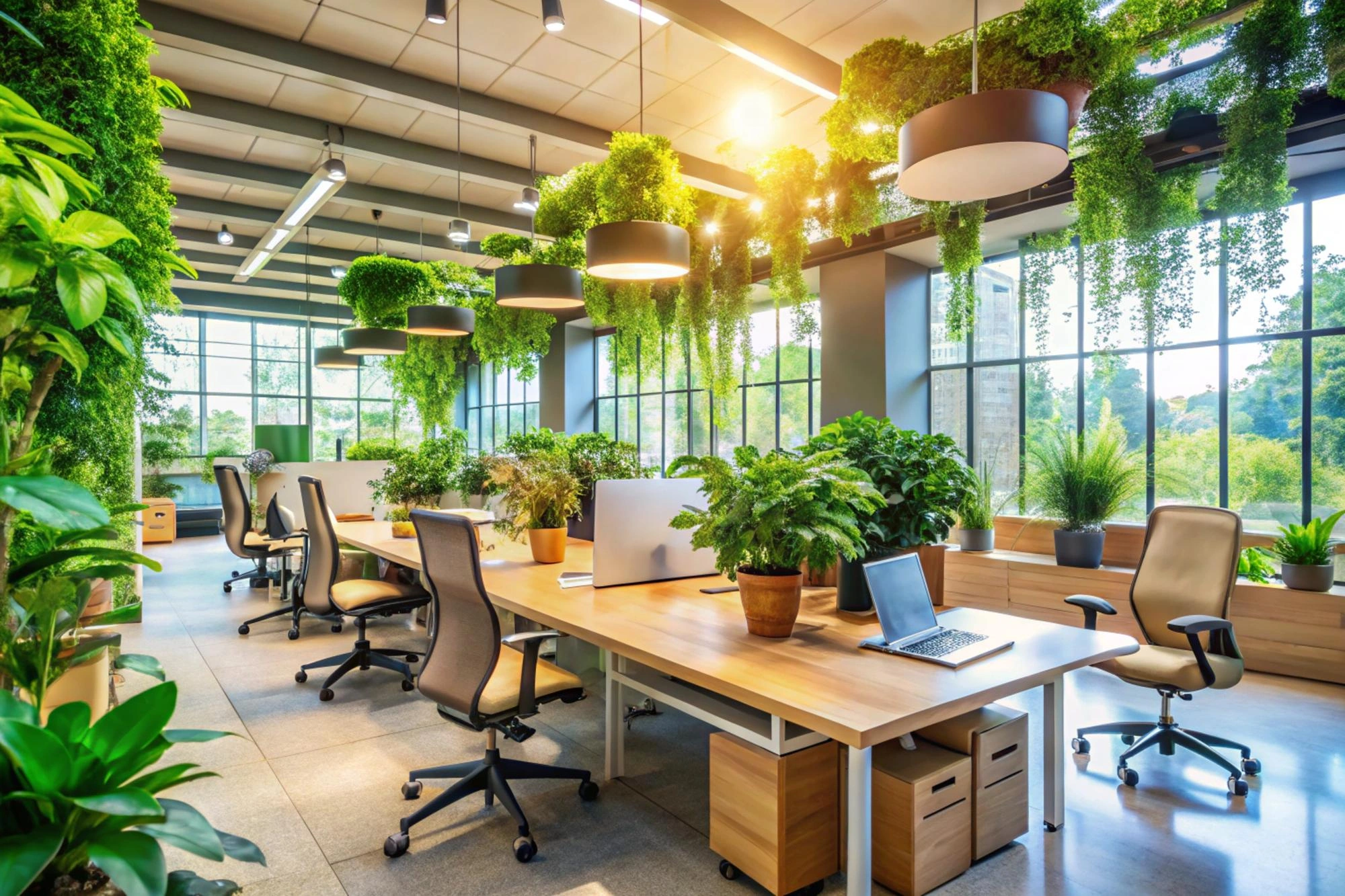
Biophilic office design—incorporating greenery, natural textures, and daylight—is becoming central to wellness-focused offices.
Water Conservation & Waste Management
Rainwater harvesting, low-flow fixtures, and waste segregation are now standard in eco-friendly office trends in India.
How Indian Cities Are Adapting to Eco-Friendly Workspaces
Metro Cities Leading the Change
Cities like Bengaluru, Pune, Mumbai, Delhi NCR, and Hyderabad are seeing rapid adoption of green commercial developments and sustainable workplace solutions.
Tier-2 Cities Embracing Green Growth
Tier-2 cities are increasingly investing in sustainable office spaces as businesses expand beyond metros.
Government Support & Initiatives
Policy incentives, green building norms, and renewable energy programs are strengthening India’s sustainable ecosystem.
How Businesses Can Transition to Eco-Friendly Workspaces
Choose a Green-Certified Building
Opting for certified developments ensures compliance with sustainability benchmarks and energy standards.
Partner with Sustainable Interior Designers
Design experts specialising in eco-friendly office design for businesses help align aesthetics with sustainability goals.
Opt for Flexible or Managed Offices
Flexible and managed office formats reduce waste, improve utilisation, and support green office solutions for corporates—including eco-friendly coworking spaces.
The Future Outlook: Eco-Friendly Workspaces in India
The next phase of workplace design will focus on innovation and accountability.
- Net-zero workplaces powered by renewable energy
- Carbon-neutral offices with reduced lifecycle emissions
- AI-driven energy optimisation for real-time efficiency
These advancements will define the future of sustainable workspaces in India.
Conclusion: Building a Sustainable Future of Work
Eco-friendly workspaces are no longer optional—they are shaping the future of work in India. By investing in sustainable office design, businesses benefit from lower operating costs, healthier employees, and a stronger environmental impact.
As India moves toward a greener economy, organisations that adopt sustainable workplace solutions today will be better positioned for resilience, growth, and long-term success.
FAQs
- What is sustainable office design in India?
It refers to office spaces designed to reduce environmental impact while improving energy efficiency and employee well-being. - Are eco-friendly offices more expensive?
While initial planning may cost more, eco-friendly offices reduce long-term energy, water, and maintenance expenses. - How do eco-friendly offices improve productivity?
Better air quality, natural light, and ergonomic design contribute to improved focus and employee performance. - What certifications define green office spaces in India?
LEED and IGBC certifications are commonly used benchmarks for green office buildings.
- Can existing offices be made eco-friendly?
Yes. Energy-efficient systems, sustainable interiors, and responsible material choices can upgrade existing offices.