
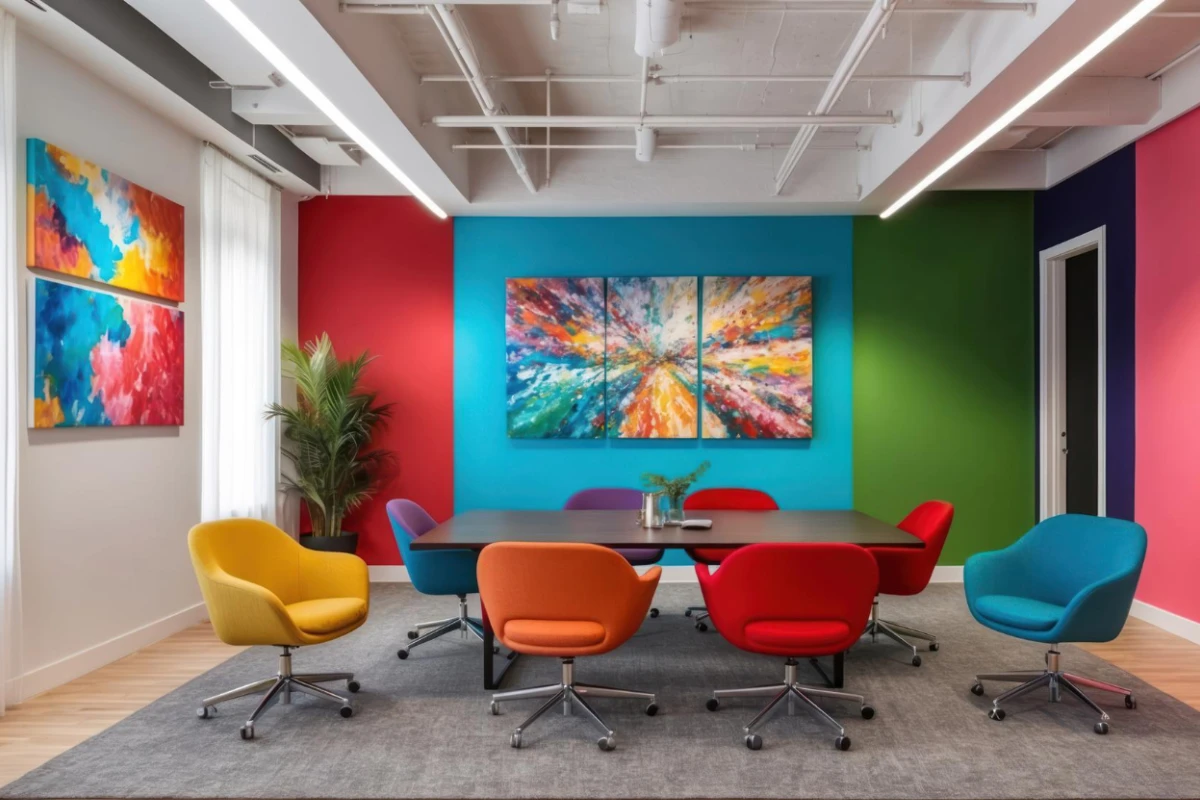
World-class products mean little when they don’t connect with your potential prospects on a personal level. This is why perception is crucial, especially in business.
One of the most important, yet often overlooked, aspects influencing perception is a physical space. The design of these spaces changes how your customers, clients, and employees perceive your business. The very moment someone walks through your doors, the space represents who you are and what you value.
These opinions are often subconscious and formed within split seconds. A well-designed space reinforces your brand values, cultivates trust, and creates a sense of consistency.
In a shared workspace, the physical space is the product. In such spaces, where multiple businesses coexist, crafting a cohesive design becomes slightly more complex. However, it is still equally vital.
Why Your Shared Workspace Branding Strategy Matters
Shared workspaces need to cater to multiple businesses and user types with their own identities, expectations, and working styles. Just slapping their logos on the wall is not enough.
The trick is to cultivate an environment that authentically reflects the space’s core values without overpowering the individuals or companies within it.
It’s all about balance. Establishing a strong, recognizable identity for the workspace provider with an approach that is neutral yet adaptable is crucial to creating a welcoming space. Whether it’s a fast-scaling startup, a creative agency, or a solo consultant, the space needs to resonate with a diverse audience.
A great shared workspace design brings your brand story to life through color palettes, materials, lighting, layout, signage, and spatial flow. It creates emotional cues and visual consistency that communicate the brand’s personality without being intrusive.
Thoughtful branding in shared spaces can:
- Help differentiate your workspace in a saturated market
- Foster a sense of belonging for users and their clients.
- Reinforce professionalism, credibility, and trust.
- Encourage repeat usage, referrals, and long-term occupancy.
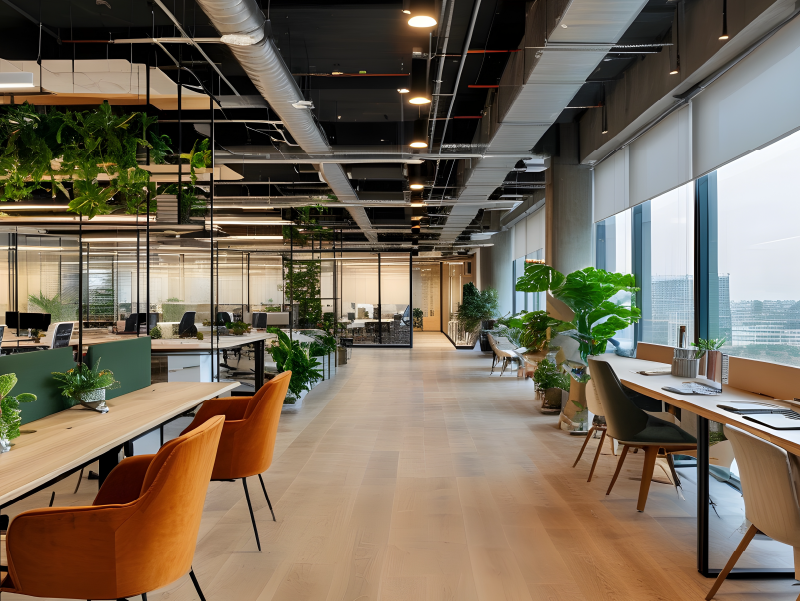
How Interior Design Communicates Brand Values
The design of your shared workspace is a strategic language. Every element within a space should be purposeful and must communicate something.
1.Color
Color psychology plays a crucial role in how a space is perceived.
- Cooler tones such as blue and green often signal trust, calm, and clarity, perfect for professional environments.
- Warm colors like red and orange help energize and stimulate collaboration, creativity, and boldness.
- Neutral colors signify balance, stability, and inclusivity, ideal for shared zones accommodating multiple brand identities.
2.Layout
Spatial planning reveals how you value people’s time, comfort, and working styles. A good layout promotes efficiency and community, showcasing a good understanding of how people actually work.
- Open layouts suggest transparency and collaboration.
- Defined zones (meeting areas, lounges) indicate respect for diverse work styles and productivity needs.
- Flow and circulation patterns subtly influence how people interact with each other and with the space.
3.Material & Finish Choices
Materials can have an impact on mood and the perception of the space.
- Natural wood and stone promote sustainability and warmth
- Polished metals and glass signify modernity and precision
- Recycled or upcycled materials signal a commitment to eco-consciousness and innovation
4.Signage & Wayfinding
Even functional elements like signs and graphics are part of our brand language.
- Minimal, clean signage suggests a refined, focused approach
- Playful typography and iconography may signify a creative, people-first culture
In contrast to the cluttered layouts, clarity in wayfinding shows you value user experience.
5.Lighting
Lighting impacts emotion and productivity.
- Natural light boosts wellbeing and transparency.
- Warm lighting adds comfort while cooler tones encourage focus
- Statement lighting fixtures can work as brand signatures, adding a unique layer to key areas
How to Align Brand Identity with Diverse User Needs
Designing multiple layers of identity can be challenging for the shared workspace operators and the individuals or businesses using the spaces.
Balancing band identity with user needs can help them give users the freedom to express themselves and make them feel at home.
Brand Presence Without Dominance
Branding helps operators build recognition, trust, and differentiation. However, it needs to be subtle. Too dominant a visual language can make the space feel “owned,” making tenants feel like visitors.
Zones That Support Personalization
Planning opens up layers of customization, especially in private offices or designated team areas. Tenants benefit with the freedom to personalize their zones: pinboards, desk decor, branded screens, and light adjustments.
The personalized branding in coworking interiors must maintain design synergy. The zones need to be neutral enough to be adapted and curated enough to be coherent. Achieving this balance will reflect the operator’s brand standards and ensure a hassle-free user experience.
Diverse Functional Zones, Unified Aesthetics
Shared spaces need to support work modes like focus, collaboration, casual interaction, and formal meetings.
- A strong shared workspace interior strategy includes:
- Quiet zones or phone booths for focused work or calls
- Collaboration areas with flexible seating, writable surfaces, and informal energy
- Neutral lounges or cafés that serve as social hubs, and do not align with any specific tenant
Inclusivity & Accessibility
Acknowledging diversity in work styles, needs, and identities is crucial for operators. This includes designing ergonomic furniture, accessible entryways, sensory-sensitive lighting, and gender-neutral facilities—providing equal support to all.
How interior design for shared workspaces Drives Business Results
Interior design is a strategic business decision with real, measurable returns. A thoughtful design translates to stronger brand loyalty, improved user retention, and powerful word-of-mouth marketing for the shared workspace.
1.Loyalty and Retention
Users want an environment that aligns with their values, supports their productivity, and makes them feel seen.
An easy-to-navigate, inclusive, and inspiring workspace encourages people to stay longer, renew leases, and even refer others.
For operators, this means:
✅Lower churn
✅Higher occupancy
✅Stronger brand reputation
2.Shaping Customer Behavior
Hosting client meetings, running workshops, or welcoming prospects, your space speaks of your credibility and professionalism.
✅A neatly crafted reception area sets the tone of confidence
✅A clean, well-lit meeting room builds trust
✅A thoughtfully zoned office shows you care about the people and how they work
3. Impact on Productivity and Culture
A good design is good for people, beyond being visually appealing. A design that incorporates natural light, ergonomic setups, sound control, and spatial planning all plays a critical role in supporting focus, wellness, and workspace dynamics.

For shared workspace users, this translates to:
✅Better performance
✅Stronger team dynamics
✅Healthier work culture
The operators will benefit as the user associates these benefits with your brand, driving success.
To Sum Up
Today, shared workspace needs to be intentional to achieve maximum traction. With every element communicating something about your brand, design becomes the common thread that connects them all.
As you craft interiors that reflect your and your user’s values, you transform your space into a strategic asset that influences perception, builds trust, and helps your brand stand out.
Want your workspace to speak your brand’s language?
Partner with Whitehills Interiors for tailored, branded coworking environments that combine form, function, and impact.
Frequently Asked Questions
Q. How does space planning impact the brand experience in shared workspaces?
A: It shapes how people feel and connect with your brand the moment they step into the space.
Q. Why should I consider branding while planning a shared workspace layout?
A: Because a well-branded space tells your story and makes your workspace memorable.
Q. Can you customize shared workspaces according to my brand identity?
A: Absolutely, We design every space to reflect your brand’s style, values, and vibe.
Q. What is the process of integrating branding with space planning?
A: We start by understanding your brand and then weave its elements naturally into the workspace layout.
Q. How do you ensure functional space utilization with brand elements?
A: By blending smart design with your brand identity, so the space works beautifully and looks on-brand.