
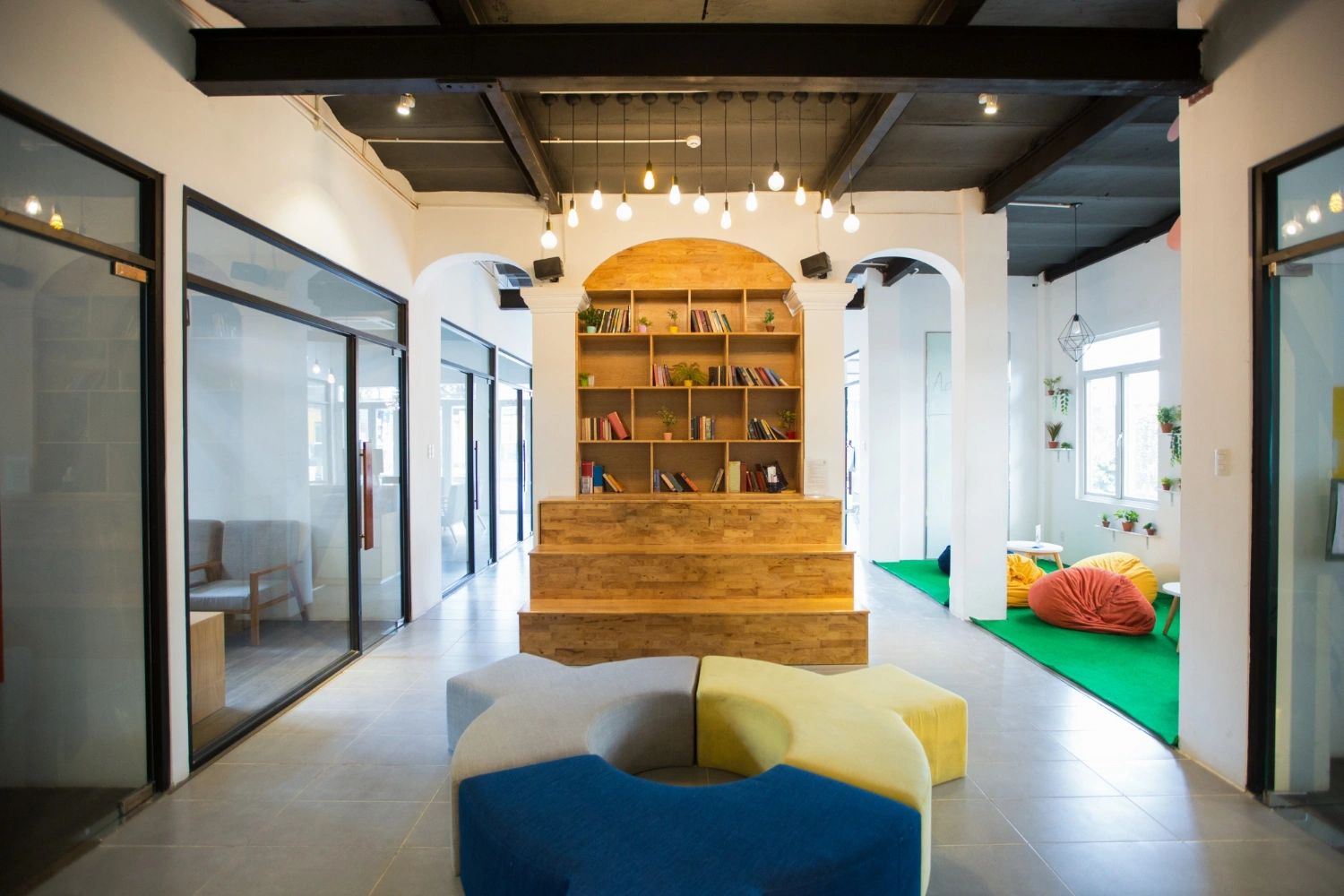
The way we work today, it has completely changed. The introduction of hybrid workspaces has revolutionized how offices are designed, kept, used, and experienced. Post-pandemic, businesses are no longer limited to offices around fixed desks and rigid layouts.
As companies move towards a mix of in-office and remote work, offices are evolving from rows of desks into international workspaces. This shift has made flexible office interior design and hybrid workspace design essential for businesses to expand and grow.
What is Hybrid Office Design?
Hybrid office design is an approach to office interior design for hybrid work that blends face-to-face collaboration with remote working needs. It supports both collective and individual workstyles giving flexibility to the employees to choose and decide how they want to work.
Modern Hybrid office designs focus on:
- Collaboration without overcrowding
- Focus without isolation
- Technology without complexity
The goal of hybrid workplace interiors is to create a balanced environment that works seamlessly for in-office teams, remote professionals, and hybrid schedules.
Need for Hybrid Office Design Today
Employee Expectations Have Changed
Today’s workforce values flexibility more than ever. Employee-centric office design plays a crucial role in retention and engagement. They expect offices to support autonomy, comfort, and well-being.
Work is No Longer Tied to a Desk
Hybrid work has shifted the role of the office—from a daily requirement to a purpose destination. Now offices need to justify the commute by offering collaboration, connection, and culture.
Stronger Talent Attraction
Companies investing in the best interior design for hybrid offices stand out in competitive hiring markets. Thoughtfully designed spaces signal innovation, care, and future readiness.
Hybrid Office Interior Design Ideas 2026
-
Flexible Workstations
Hot desks, touchdown areas, and modular furniture are core to flexible workspace interiors. These elements allow teams to scale up and down easily and support different work styles.
-
Technology-integrated Meeting Spaces
Hybrid meetings are now the norm. Video conferencing-ready rooms ensure smooth collaboration between in-office and remote teams— an essential aspect of office interior design for IT companies and distributed teams.
-
Acoustic Management Solutions
Open layouts can quickly become distracting. Acoustic pods and sound-treated rooms reduce noise and improve concentration, making them vital for interior design solutions for hybrid offices.
-
Collaboration Zones
Informal seating areas, breakout spaces, and lounge zones encourage interaction and ideation. These zones are crucial for cultivating a culture within corporate office interiors for hybrid teams.
-
Focused Work Areas
Quiet zones for uninterrupted work are often overlooked. Dedicated focus areas are essential for productivity and balance in hybrid office interior design ideas.
-
Meeting Room Booking Systems
Desk and room booking tools help optimise space usage and prevent overcrowding. These systems support efficiency and flexibility in modern office interiors.
-
Health & Wellness Considerations
Natural light, ergonomic furniture, improved air quality, and biophilic office design using indoor plants and greenery create healthier, more engaging work environments.
-
Right-Sized Meeting Rooms
Instead of large, underused boardrooms, modern offices now prioritise smaller, tech-enabled rooms. This approach aligns with hybrid workspace layout ideas and improves space efficiency.
How to Know if Your Hybrid Office Design is Working
A successful hybrid office isn’t just visually appealing—it performs well.
-
Employee involvement from day one
Teams should have a voice in how spaces are designed and used.
-
Clear, simple protocols
Employees should be aware of when, where, and how to utilize different spaces.
-
Continuous improvement
Regular feedback and usage data help refine layouts over time.
-
Spaces are used as intended
If collaboration zones, focus areas, and meeting rooms are actively used, the design is doing its job.
Common Mistakes to Avoid in Hybrid Office Design
- Overdesigning collaboration and underdesigning focus.
- Noise issues can quickly reduce productivity.
- Hybrid offices must adapt based on real usage, not assumptions.
Avoiding these mistakes ensures your hybrid office design trends 2026 remain effective and future-ready.
Conclusion:
Hybrid work is not a fading trend— it represents the future of hybrid office interiors. Businesses that invest in adaptable, people-first design are better equipped to support productivity, collaboration, and work-life balance.
The most successful hybrid office interior design solutions prioritise flexibility, wellness, technology, and human experience. By embracing modern office interiors 2025, organisations can create workplaces that truly support how people work today—and how they will work tomorrow.